Beschreibung
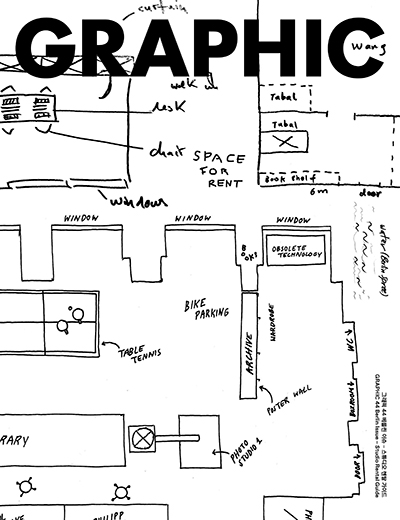
Graphic—is focused on the other trends of graphic design which is different from the mainstream of it and on the phenomena thereof. It has a characteristic of an in-depth approach for one theme with the editorial policy of one issue-one theme.
Most people know close to nothing about Berlin’s economy. The one thing everyone can agree on is the fact that the average wage of Berlin is significantly lower than any other cities in Germany, and that Berlin city government has suffered from deficit spending year after year. Truth be told, it was none other than reasonable living costs and rents that pushed Berlin to become the powerhouse of creativity. However, at this point, things are not as they used to be. Some argue that the surge of rent prices over the past few years will fundamentally change the city’s nature of cultural ecology.
Nevertheless, Berlin is still considered as one of the most desirable cities to move in for young creators. Berlin is more like a natural organic body; various forms of cultural events co-exist, and each of its districts reflects the daily life of immigrants from different parts of the world. Ever-increasing energy comes out of exhibition openings held by over 300 independent cultural organizations on a daily basis—this is not even counting events hosted by city-run museums and large art galleries. Street walls covered in posters—a process and a result of both cultural and economic activity—also reveal the lively side of Berlin.
Here are some questions that arise. How does this diagnosis reflect the reality of Berlin? Or is it just a prejudice or a superficial bias? Is there any opportunity left in Berlin? What does it mean to be Berlin? Is it still valid?
Year: 2020
Published: quarterly
From: South Korea, Seoul
Language: English, Korean
Pages: 210
Dimensions: 30 × 23 × 1.3 cm
Weight: 0.8 kg